Review: Christmas Irish Red Setter Winter Art
As a designer who spends more time staring at stitch maps than actual fabric, I have learned to be skeptical of holiday-themed graphics. The market is flooded with generic snowflakes and cartoonish reindeer that look charming on a screen but turn into a tangled mess under the needle. When I first pulled up Christmas Irish Red Setter Winter Art, my initial reaction was cautious curiosity. This piece falls under the category of Illustrations, which usually implies a higher level of artistic intent and complexity compared to standard clipart. But does it hold up when translated into thread?
I decided to put this design through its paces, not just as a digital asset, but as a potential centerpiece for a real-world product line. My goal was to determine if this design could carry the weight of a premium handmade product or if it was better suited for quick, low-stakes crafts.
First Impressions and Visual Personality
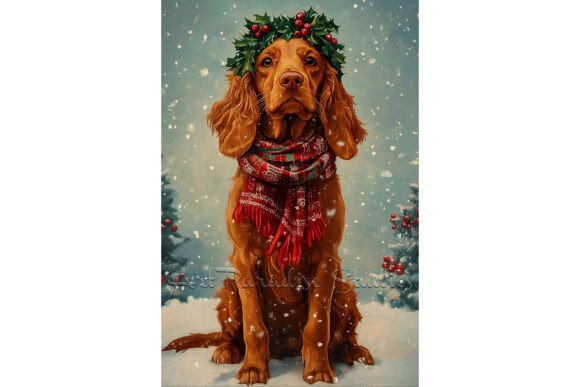
The immediate mood of Christmas Irish Red Setter Winter Art is warm, nostalgic, and distinctly elegant. Unlike the bright, primary-colored cartoons often seen in December, this design leans into a softer, more realistic aesthetic. The silhouette of the Irish Red Setter is graceful, capturing the breed’s characteristic poise even in a static image. For embroidery designers, the layout is crucial. The composition feels balanced, with enough negative space to allow the stitching to breathe without looking sparse.
The detail level is moderate to high, which is a double-edged sword in machine embroidery. It suggests a richness that appeals to dog lovers and art enthusiasts alike, but it demands respect from the operator. This is not a design you can slap onto a rough towel and expect perfection. It belongs on projects where the fabric quality matches the artistic merit of the image.
Real-World Application: The Holiday Tote Test
To test the practical viability of this design, I envisioned a specific project: a custom embroidered tote bag for a boutique pet supply shop. The client wanted something that felt upscale, not kitschy. I imagined using a heavy canvas tote in a deep forest green or charcoal gray. The rich reds and whites of the Christmas Irish Red Setter Winter Art would pop beautifully against these darker backgrounds.
In this scenario, the design acts as the hero element. It is large enough to be recognized from a distance but detailed enough to reward closer inspection. For an Etsy seller or small shop product creator, this kind of visual appeal drives buyer engagement. Customers are not just buying a bag; they are buying a piece of art that reflects their love for their pets. The handmade product feels curated and thoughtful, which justifies a higher price point.
Beyond tote bags, this design translates well to sweatshirt embroidery. Imagine it placed on the left chest of a high-quality cotton fleece hoodie. The soft texture of the fleece complements the organic lines of the illustration. However, one must be mindful of the stitch density. If the design relies heavily on fill stitch areas, it can make the fabric stiff. On a garment, comfort is key, so adjusting the density or using a lighter weight stabilizer might be necessary to maintain drape.
Navigating Technical Challenges
While the aesthetic is strong, there are areas where Christmas Irish Red Setter Winter Art requires careful handling. Any design labeled as an illustration likely contains fine lines and subtle gradients. In embroidery, these translate to running stitch details or very short satin stitch segments.
If you are working with textured fabrics like terry cloth or thick wool, these fine details may get lost. The pile of the fabric can swallow thin threads, making the design look muddy. In such cases, I recommend testing the design on scrap fabric first. You might need to simplify certain elements or increase the thread weight to ensure clarity.
Another critical consideration is the hoop size. Ensure your machine can accommodate the full dimensions of the design without needing to re-hoop, which risks misalignment. For smaller items like baby embroidery projects or caps, this design might be too large or complex. A curved surface like a cap introduces distortion, and intricate illustrations do not always warp gracefully. For hats, I would suggest using a simplified version or focusing on just the head profile if available, rather than the full winter scene.
Dark fabrics present another challenge. If the design includes light colors for snow or highlights, you must ensure your thread colors have enough contrast. A white thread on a black background is standard, but if the design uses cream or light gray, it might vanish. Always check your digital embroidery file settings to confirm color stops and thread changes align with your inventory.
Commercial Viability and Brand Consistency
For commercial embroidery professionals, consistency is everything. Using Christmas Irish Red Setter Winter Art across a product line—such as matching aprons, tea towels, and pillow covers—creates a cohesive brand identity. It signals professionalism and attention to detail. When customers see the same high-quality design on multiple items, it builds trust.
This design is particularly effective for personalized gift markets. Dog owners are passionate, and a high-quality representation of their breed is always a hit. Whether it is for a holiday gift or a year-round item, the emotional connection drives sales. However, before listing finished items or selling the design assets themselves, you must confirm licensing. Not all embroidery file purchases include commercial rights. Check the terms carefully to avoid legal issues down the line.
Practical Designer Notes
Before you commit to a full production run, keep these technical tips in mind:
- Test on Scrap Fabric: Always stitch out a sample on the exact fabric you plan to use. This reveals issues with puckering or thread breaks.
- Check Stabilizer Choice: For stretchy fabrics like jersey, use a cut-away stabilizer. For woven fabrics like canvas, a tear-away may suffice, but hooping stability is key.
- Inspect Small Details: Zoom in on the digital preview. Look for tiny jumps or excessive trims that might slow down your machine or create messy backs.
- Contrast Testing: View the design in black and white mockups. If the details disappear in grayscale, they will likely lack definition in thread.
- Wash Testing: Stitch a sample, wash it, and dry it. Check for shrinkage or thread fraying. This ensures your finished product remains durable for the customer.
In conclusion, Christmas Irish Red Setter Winter Art is a sophisticated choice for designers who value artistic integrity over speed. It requires skill to execute properly, but the result is a premium embroidered patch or garment feature that stands out in a crowded market. It is best suited for stable, medium-to-heavy weight fabrics where the details can shine. For the craft business owner willing to invest the time in proper setup and testing, this design offers a distinct competitive edge.