Reviewing the Christmas Frames Clipart Bundle for Embroidery
As a designer who has spent countless hours digitizing and stitching out holiday motifs, I approach any new asset with a mix of excitement and skepticism. The Christmas Frames Clipart Bundle caught my eye not just for its festive theme, but for its potential utility in real-world production. When you run a small shop or manage client orders, you do not have time for designs that look pretty on a screen but fail under the needle. I evaluated this collection from the perspective of an experienced embroidery product reviewer, focusing on how these illustrations translate into tangible, high-quality stitched goods.
First Impressions and Visual Personality
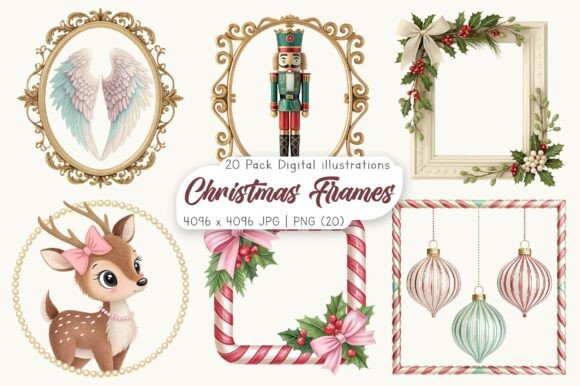
The immediate mood of the Christmas Frames Clipart Bundle is warm and inviting, striking a balance between traditional holiday charm and modern minimalism. The shapes are clean, which is crucial for embroidery. Overly complex vector lines often result in messy stitch-outs, but these frames appear to have a structural simplicity that lends itself well to machine interpretation. The visual personality suggests versatility; it is not so childish that it cannot be used on adult apparel, nor so formal that it feels out of place on a cozy baby item.
For embroidery designers, the layout of these frames is particularly interesting. They are designed to enclose space, which means they are inherently interactive. You are not just stitching a picture; you are creating a container for text, monograms, or other central motifs. This makes the bundle a powerful tool for personalization, a key driver of sales for Etsy sellers and craft business owners.
Real-World Application: The Custom Tote Bag Test
To understand the practical value, I imagined a specific scenario: preparing a custom embroidered tote bag for a holiday market. Tote bags are a staple for small shop products because they are functional and offer a large canvas. Using one of the larger frames from the Christmas Frames Clipart Bundle, I envisioned placing a client’s family name in the center, rendered in a classic serif font, surrounded by the decorative border.
In this context, the frame acts as a anchor. It gives the design weight and professionalism. Without the frame, the text might float awkwardly on the fabric. With it, the composition feels complete and intentional. This kind of thoughtful design integration increases the perceived value of the handmade product. Customers are more likely to trust a brand that presents cohesive, well-structured visuals. Whether you are creating boutique branding or simple holiday gifts, the frame elevates the basic text into a designed asset.
Versatility Across Product Lines
The true strength of this bundle lies in its adaptability across various substrates and items. Here is how I see these illustrations performing in different embroidery projects:
- Sweatshirt Embroidery: The frames work beautifully on the chest or back of a hoodie. The open center allows for bold lettering that remains legible even from a distance.
- Baby Embroidery: Smaller versions of the frames can surround a birth date or name on a onesie or blanket. The soft, rounded edges of many frame styles are gentle and appropriate for nursery decor.
- Embroidered Patch Creation: These designs are ideal for patches. The clear boundaries of the frames make it easy to cut and finish the edges, whether you are using a merrowed border or a raw edge applique design technique.
- Kitchen Textiles: On tea towels or aprons, a frame can highlight a festive quote. The durability of the stitch pattern is key here, as these items undergo frequent washing.
For digital product sellers, these assets are equally valuable. You can use them to create printable mockups or promotional graphics for your Etsy listings. A well-framed preview image draws the eye and helps buyers visualize the finished product on their own items.
Technical Considerations and Stitching Challenges
While the aesthetic appeal is strong, we must address the technical realities of turning a clipart illustration into a machine embroidery design. Not every graphic translates perfectly to thread. Here are the areas where you need to exercise caution and professional judgment.
Stitch Density and Fabric Texture: If the original clipart has very fine details or tight corners, these may require high stitch density to reproduce accurately. On textured fabrics like terry cloth or heavy wool, fine details can get lost. I recommend testing the design on scrap fabric first to check how the thread colors interact with the fabric texture. If the frame is too dense, it may cause puckering, especially on thinner materials.
Hoop Size Constraints: Always confirm the hoop size required for the specific file you are using. Some frames in the bundle may be large, requiring a 5x7 or 6x10 hoop. If you are working with smaller hoops, you may need to resize the design, which can affect stitch count and clarity. Never assume a design will scale down indefinitely without losing integrity.
Curved Surfaces: Applying these frames to caps or hats requires careful placement. The curvature of the cap can distort the shape of the frame. It is best to use a stabilizer that provides firm support and to avoid placing the design too close to the seam where the hoop cannot reach evenly.
Dark Fabrics and Contrast: When stitching on dark fabric, ensure there is sufficient contrast between the thread colors and the background. A light-colored frame on a navy sweatshirt pops nicely, but if the frame relies on subtle shading, it may disappear. Test your design in black and white mockups to verify that the shape remains distinct without color reliance.
Enhancing Brand Consistency and Customer Trust
For commercial embroidery and small business owners, consistency is vital. Using a cohesive set of design assets like the Christmas Frames Clipart Bundle helps build a recognizable brand identity. When customers see a consistent style across your tote bag design, sweatshirt embroidery, and digital previews, it signals professionalism. This builds trust and encourages repeat business.
Moreover, personalized gifts sell better when they look bespoke. A generic name stitched alone is common. A name framed by a unique, festive border feels custom-made and special. This attention to detail enhances the giftability of the item, making it a more attractive purchase for holiday shoppers.
Practical Designer Notes for Best Results
Before you commit to a full production run, keep these practical tips in mind:
- Check Licensing: Confirm whether the license allows for commercial use. If you are selling finished items or digital products, you must ensure you have the right to use the design assets in this way.
- Test Stabilizer: Use the appropriate stabilizer for your fabric. Cut-away stabilizer is often best for stretchy fabrics like sweatshirts, while tear-away may suffice for woven cottons.
- Inspect Small Details: Zoom in on the digitized file. Look for unnecessary jump stitches or overly complex fill stitch areas that could be simplified to a satin stitch or running stitch for cleaner results.
- Thread Color Selection: Choose thread colors that complement the holiday theme but also stand out against your chosen fabric. Classic reds, greens, golds, and silvers are safe bets, but don’t be afraid to experiment with modern palettes if it fits your brand.
In conclusion, the Christmas Frames Clipart Bundle offers a solid foundation for holiday embroidery projects. It is not just a collection of images; it is a toolkit for creating structured, professional-looking designs. By understanding its strengths and limitations, and by applying rigorous testing protocols, you can leverage these illustrations to enhance your craft business, delight your customers, and produce high-quality handmade products that stand out in a crowded market. Whether you are an experienced digitizer or a hobbyist looking to elevate your gifts, this bundle deserves a spot in your creative workflow.